
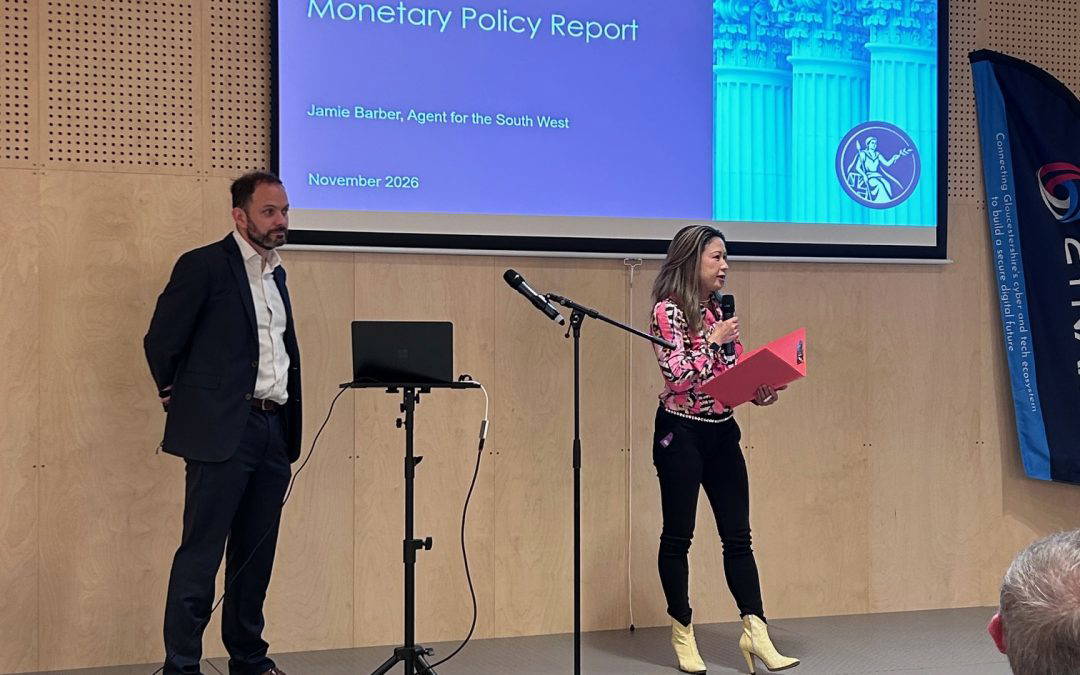
What happens when geopolitical instability sends energy prices soaring? How does that translate into higher wages, changing consumer behaviour, and new pressure for businesses? Where does artificial intelligence fit into an economy navigating both extraordinary opportunities and growing uncertainty? The forces now shaping our economy are more interconnected than ever, and we spent the morning at our Bank of England briefing event, unpicking what these shifts mean for businesses, communities, and the future of economic resilience.
Setting the scene for the discussion, Hollie Wakefield, General Manager, CyNam, said:
“No one really has all of the answers on their own, so it matters more than ever for people from different backgrounds to come together. The best ideas come from diverse minds being in the same room.”
More than 40 Gloucestershire business leaders joined Together Gloucestershire and CyNam at our co-hosted briefing with the Bank of England this morning. We heard from Jamie Barber, Agent for the South West, Bank of England, who shared insights for what is coming, what the interest rate rise really means, and what they’re expecting from the UK economy next year.
The key takeaways:
The Monetary Policy Committee (MPC) meets eight times per year, and sets the interest rate that shapes the economy in response to inflation. The key takeaways from their current modelling and policies were shared by Jamie Barber:
- Rising energy prices will continue to drive inflation: Global energy prices have continued to rise from an already elevated level. The UK Consumer Price Index (CPI) is now expected to rise by around 5% by the middle of 2027 (Q2). It is then projected to fall as the impact policy bears down on inflation.
- The interest rate rise is necessary to control inflation: While the direct effects of higher energy prices are clear and will continue to feed into business and household energy bills, there remains limited evidence of knock-on effects on other prices and wages so far. But that is expected to change. The degree of inflationary pressure in the pipeline is now sufficient to warrant an increase in the Bank Rate. Activity data in recent months has generally been stronger than expected, adding to the case for modestly tighter monetary policy.
- Monetary policy is not a pre-set path. The MPC will continue to assess the evidence at each meeting, in particular how likely high energy prices are to feed through to other prices and indirect costs, by monitoring the evolution of underlying pay, pricing behaviour, and market slack.
- Inflation needs to be controlled. The MPC will adjust Bank Rate as necessary to ensure CPI inflation returns to the 2% target in the medium term.
Finger on the pulse of business
The Bank of England has 12 regional agencies across the UK, tasked specifically with maintaining direct relationships with regional businesses and communities, as a way of going beyond the data. As Jamie Barber explained:
“The main job of the agencies is to keep in touch with businesses to hear how the economic conditions are affecting businesses in real time, and get a sense of what is happening on the ground. We can find out what the sentiment is, what the turning points are, and we can get a sense of what is anticipated or needed in the year ahead.”
“We can model all we like, but we are slightly at the hands of what is happening in the global marketplace, and when we are hit by shocks, the thinking has to change. Connection to business is essential for that.”
This matters enormously when the geopolitical landscape and fluctuating economic performance means that businesses are grappling with an ever-changing landscape.
Responding to energy shocks:
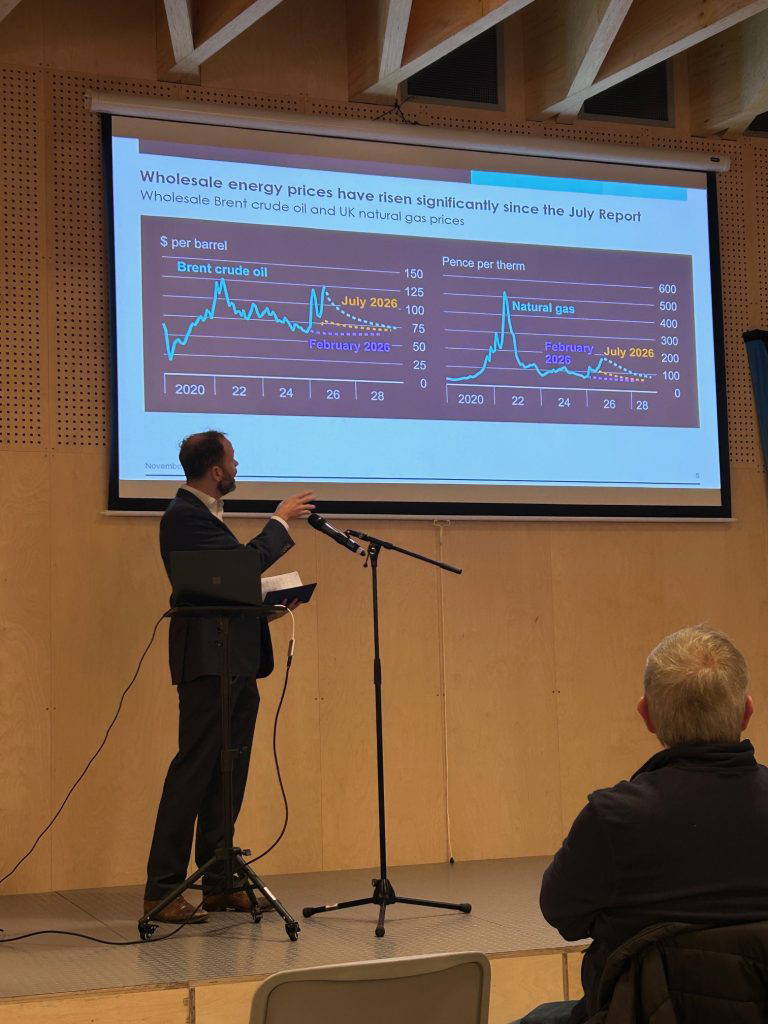
One of the central themes of the discussion was the renewed inflationary pressure emerging from geopolitical tensions in the Middle East. Disruption to energy infrastructure and global supply chains has pushed oil and gas prices significantly above previous predictions, with prices reportedly 81% higher than the levels forecast in July 2026. Energy is embedded in almost everything we produce, transport and consume so when energy costs rise, the consequences ripple through supply chains, manufacturing, food production, logistics, and ultimately household budgets. As a result, the Bank’s outlook modelling presented at the event suggests that CPI inflation could rise from 3% in September 2026 to a peak approaching 5% in the second quarter of 2027. In turn, the Bank Rate had been increased to 4%, in the hope that higher interest rates will help to control the upward inflationary pressure, and work to bring inflation back to its 2% target, in the medium term. Interestingly, the Bank Rate rise is the first move in the base rate since December 2025, and the first increase since August 2023.
While the energy shock has had an impact on inflation, it hasn’t been as significant as anticipated so far, and certainly not as significant as the energy shock of 2022. Modelling by the Bank of England shows that this recent shock (fuelled by US & Middle East conflict), is modelling closer to the 2011 shock (Arab Spring) than the 2022 shock (Russia’s invasion of Ukraine). This suggests that it won’t have quite the level of impact or volatility as we saw a few years ago. What is different compared to previous energy shocks is the gap between crude and refined prices. Damage to Middle East infrastructure has reduced refining capacity, at a time when Russia and China are protecting their own countries from price shocks, and are not fluidly responding to market demand. This could mean a more sustained level of inflationary pressure, depending on further shifts in the geopolitical landscape.
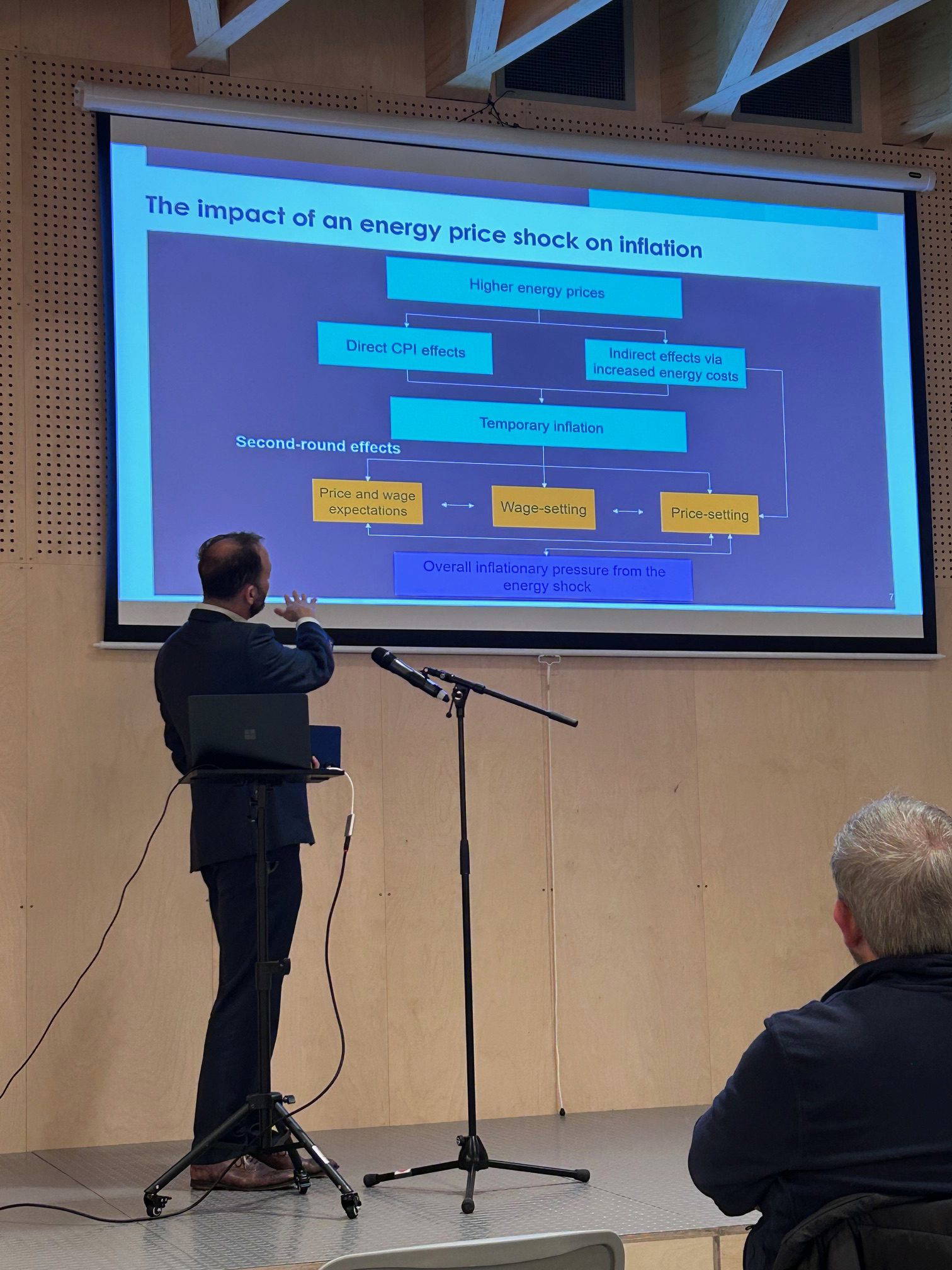
While oil & gas prices form part of the inflationary reality, it is the onward economic change that happens in response that the Bank of England is focused on. These second-round effects, including higher wages leading to higher prices, leading to sustained inflation is a more significant contributor to the Bank Rate changes, as the MPC and Bank of England seek to predict and dampen the impact of high overall inflation. Interestingly, Jamie observed that to date, these secondary-round effects on inflation have been smaller than projected in their July report, but this is being viewed as a delay rather than an escape. Food prices illustrate this challenge particularly well. Energy is needed to grow, process, package, and transport food. Although food inflation has so far been lower than expected, the Bank of England anticipates further pressure, compounded by climate-related factors including El Niño and drought conditions in Europe.
Reasons for cautious optimism
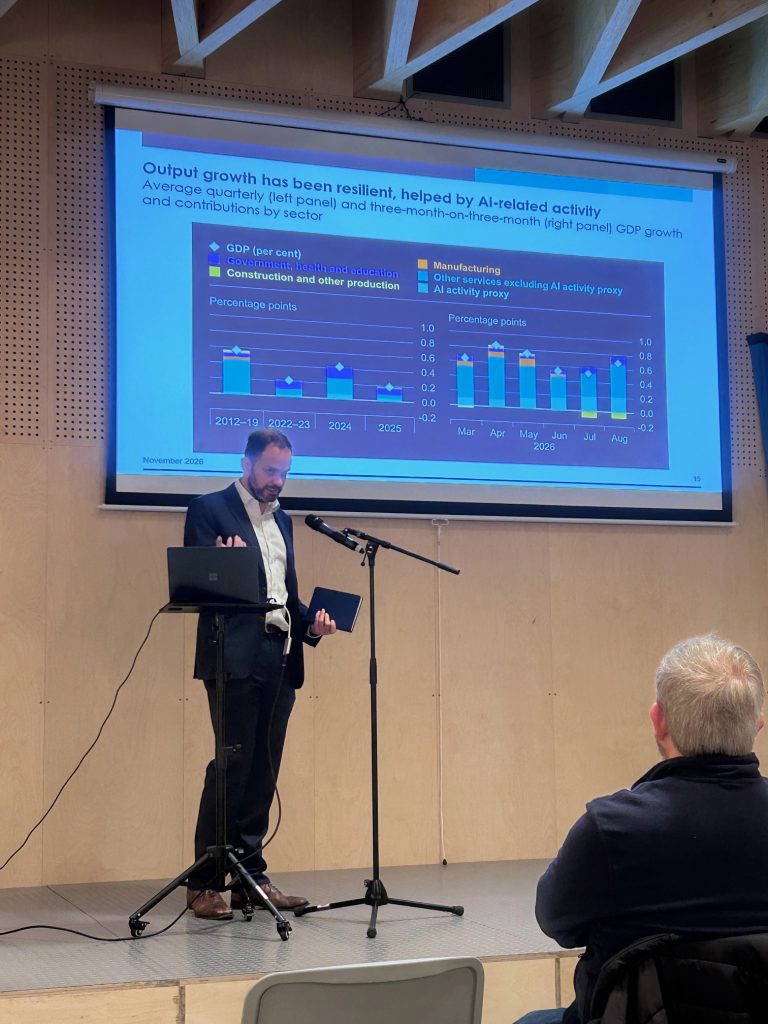
Despite the inflationary outlook, the discussion also highlighted reasons for cautious optimism. UK economic growth has proved more resilient than previously expected, with GDP growth projected at approximately 1.6% for 2026, higher than originally anticipated. That resilience is encouraging, particularly after several challenging years.
The picture is not however, uniform. While some sectors are benefiting from increased investment, innovation and productivity improvements, others, including construction, continue to face difficult conditions. The Bank of England is currently modelling and evaluating the overall impact of AI adoption, and the lkelihood that this has, in part, helped temper the recent energy shocks and geopolitical challenges, by driving efficiency and productivity gains that temper and offset some of the costs and challenges.
Consumer spending also faces potential headwinds. Although wage growth has supported improvements in real household incomes, rising inflation could erode that progress during 2027. Higher interest rates and the gradual depletion of savings accumulated during the pandemic may create additional pressure.
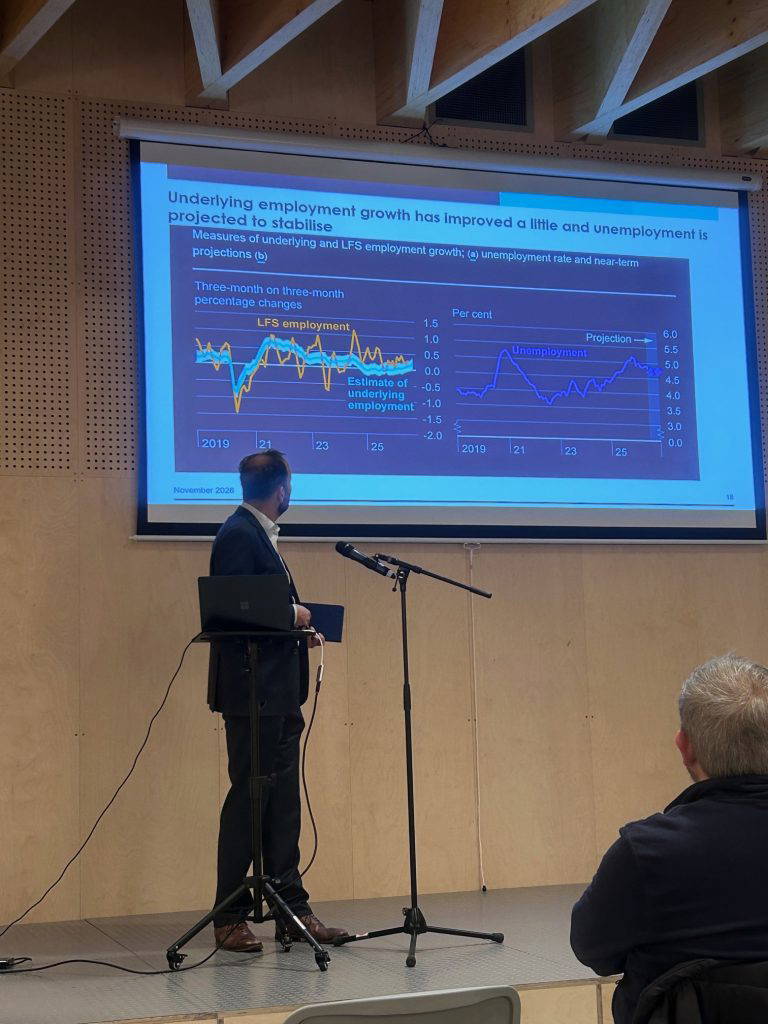
Turning our attention to the labour market and analysis shows that it has remained relatively resilient. This is positive for employment, but it creates a further challenge for inflation. When the labour market is relatively tight, businesses face continued wage pressures, making it harder for inflation to return sustainably to the Bank’s 2% target. Furthermore, the rate of adoption of AI, which looks to be in part responsible for the unexpected economic resilience of the last few months, has had some negative implications for employment, particularly of young people. AI is already contributing to the youth unemployment story: it is harder for young people to take that first step into employment, and that could have lasting economic effects in due course.
Ultimately, for businesses, the implication of the Bank of England’s modelling is that we are showing signs of economic resilience, but it cannot be taken for granted. Growth opportunities exist, but they sit alongside persistent cost pressures, changing demand and uncertainty about what comes next.
Thank you
Thank you to Jamie Barber for joining us and sharing detailed insights into the UK’s current economic performance, to CyNam for co-hosting the event at Hub8 MX, and for everyone that joined us.
Upcoming Events