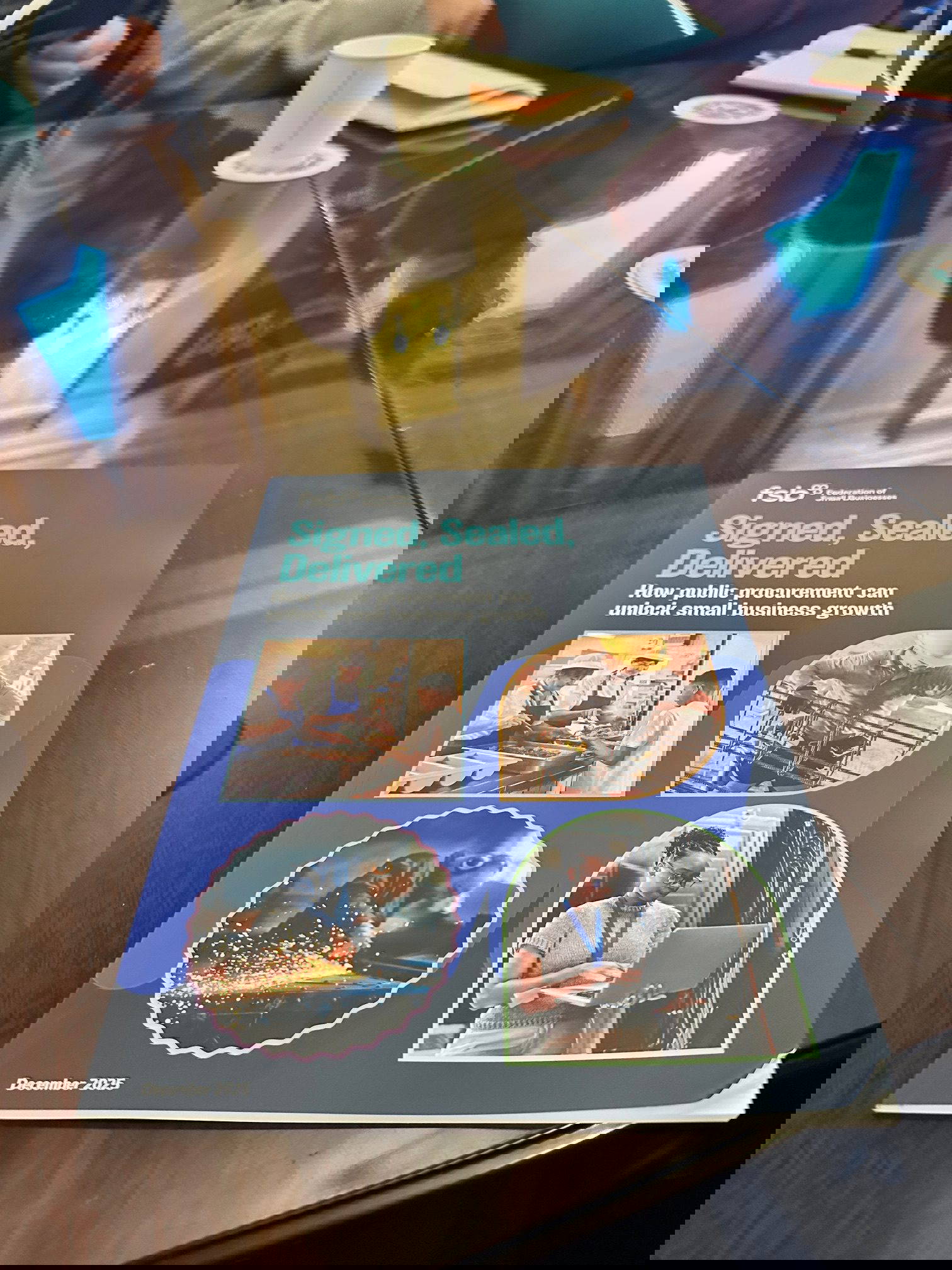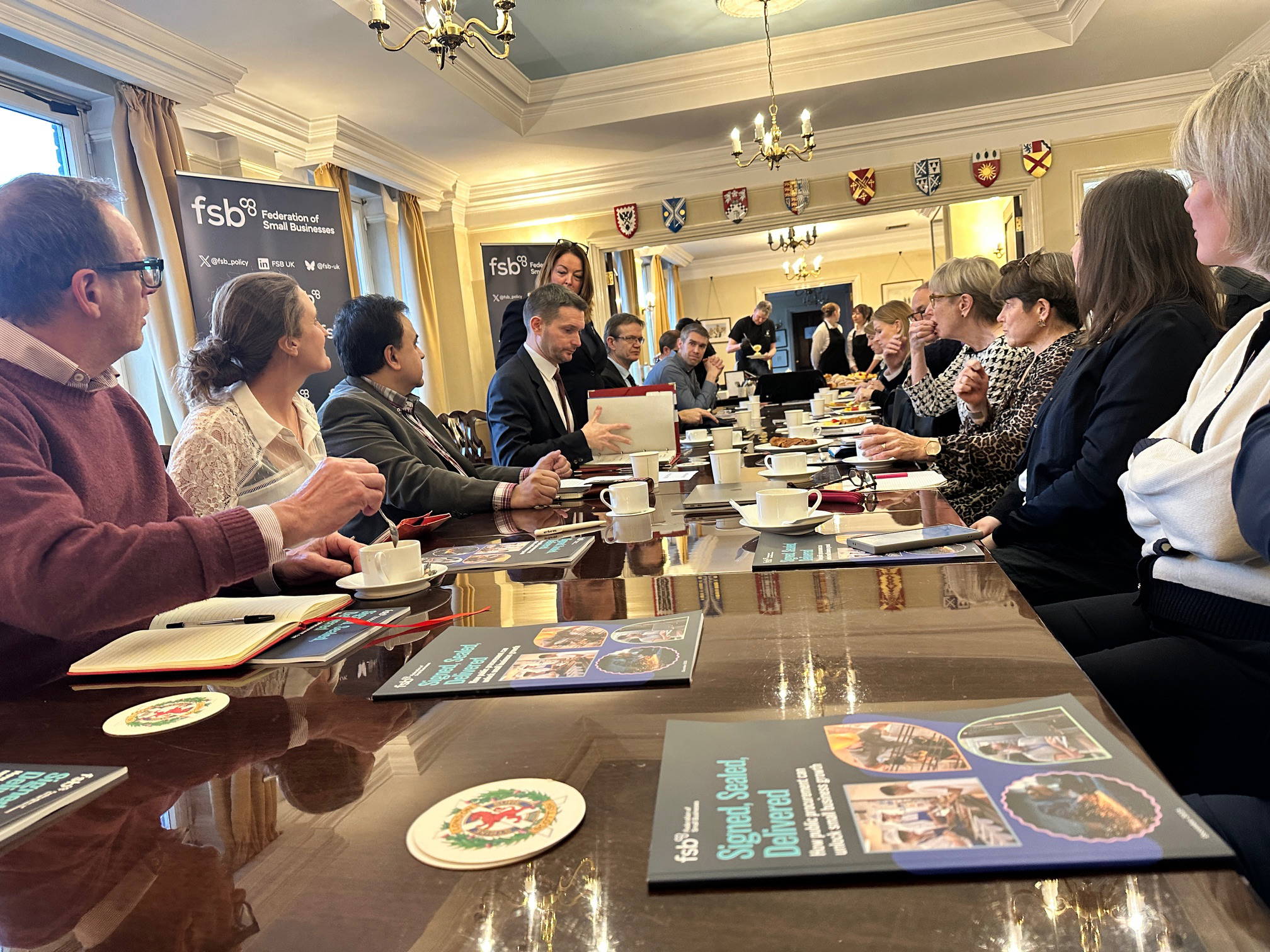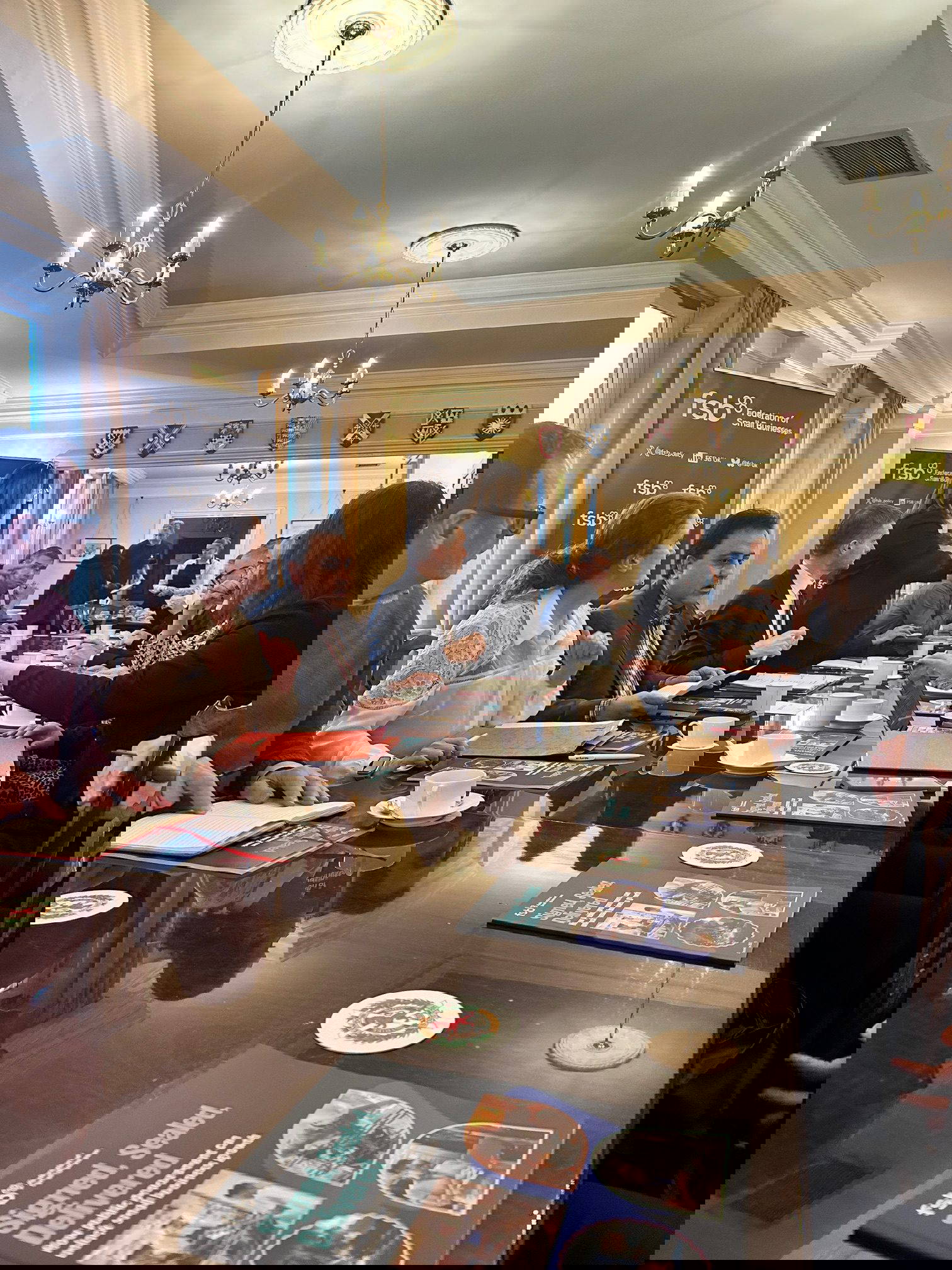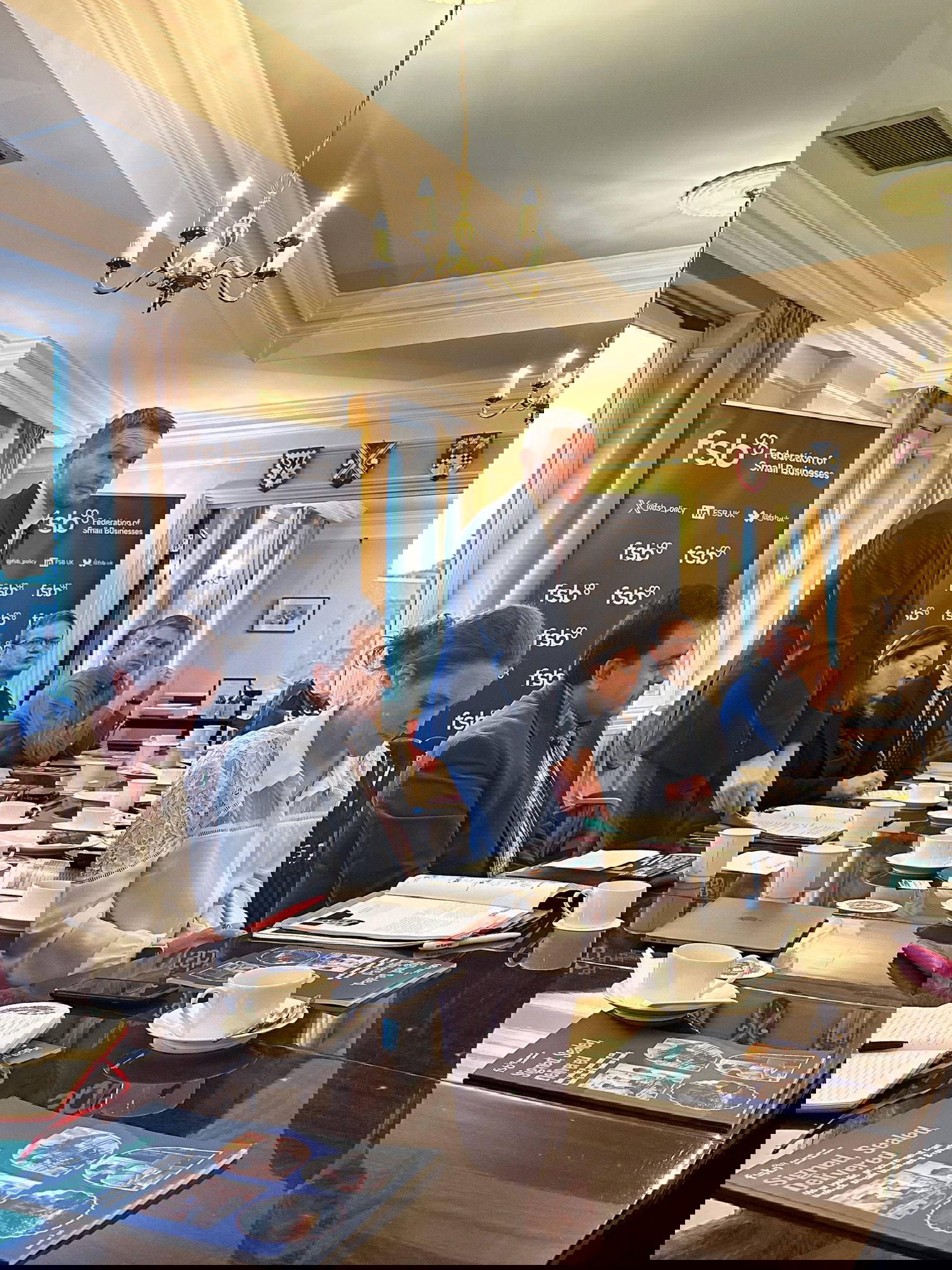
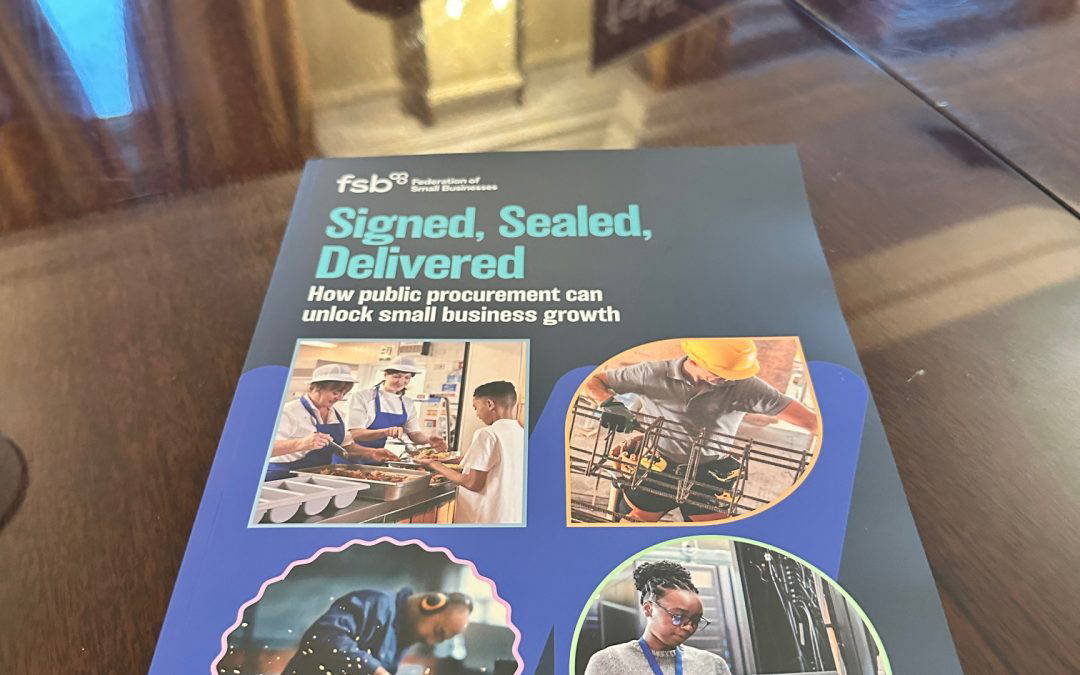
Following the launch of their much-anticipated “Signed, Sealed, Delivered” report on public procurement, which highlighted the untapped potential of British SME businesses, the FSB co-hosted an event in Parliament today with Chris Ward MP, Parliamentary Secretary (Cabinet Office).
The event explored the state of public procurement in Britain, with Chris Ward MP stating “Britain should be Britain’s biggest customer” as he went on to describe the role and relevance of British businesses within the government supply chain. Ward shared insights into the government’s approach to and policies for procurement, discussing the desire to do more business within-country and locally, using local and national suppliers to support the UK government. Ward expressed support for SMEs as the backbone of the economy, and highlighted them as the key to continued economic growth in the country.
Interestingly, as part of his opening comments, Ward highlighted the work being done to streamline SME procurement, including the Cabinet Office’s work with the MoD to enable them to work more easily with SMEs, as well as the new procurement policy publishing in February that will continue to simplify the public sector procurement process. He offered advice to businesses hoping to tender, particularly to make sure that pricing is done correctly, accurately, and is achievable whenever a tender is submitted. One key piece of advice was also aimed at subcontractors that are delivering work on behalf of organisations with public sector contracts: as the government’s payment terms are 30 days, their suppliers are also held to 30-day terms, which means subcontractors should be paid within 30 days as well. If they are not, then they have the right to approach the Cabinet Office to request an investigation, which can be used to hold the contractor to account.
Ward’s comments were followed by a round table discussion between key influencers in procurement policy, including Together Gloucestershire, represented by Adam Vines. Much was shared and discussed throughout the event, including businesses’ experience of public tendering, the shortcomings identified in the FSB report, and how to improve and streamline the processes. Adam was also able to contribute insights into the value of local and regional procurement, sharing the Together Gloucestershire model with Cabinet Office representatives for small business, who are currently looking at ways to make supplier sourcing more local and much simpler.