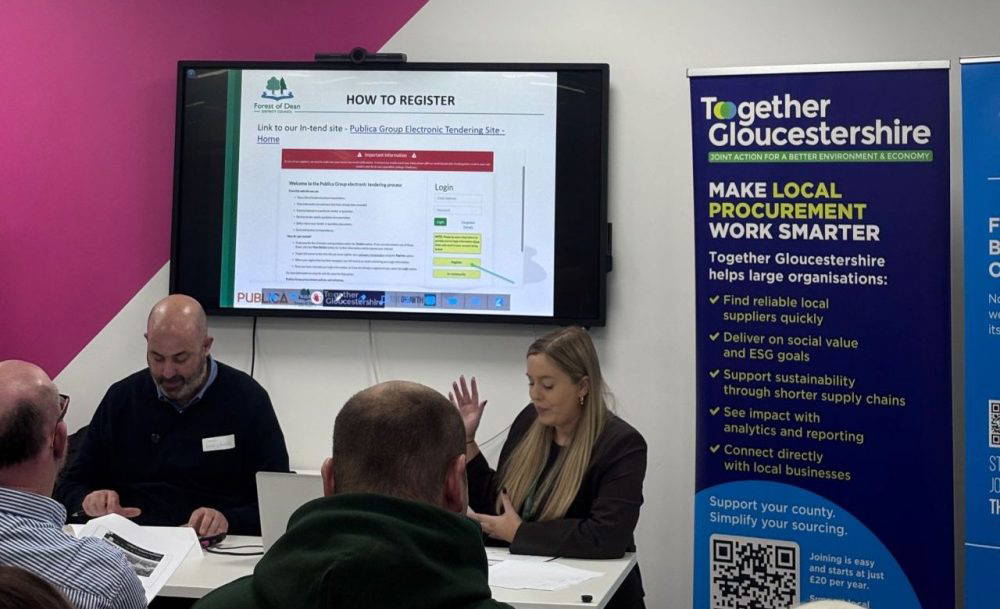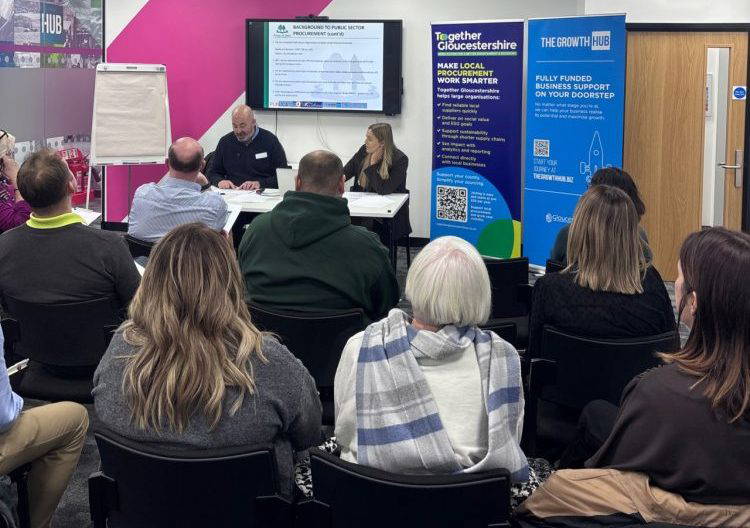
Local government buying, how it happens, how to sell to them, and how those same buyers evaluate suppliers were the topics of discussion at the Together Gloucestershire event, in partnership with The Growth Hub Forest of Dean. We brought together expert speakers on social value and public procurement to enlighten the audience on how to get stuck in.
Top five things we learned at the event
Social Value is gaining importance
Despite becoming enshrined in legislation in January 2013 via the Public Services (Social Value) Act 2012, Social Value has only really gained obvious momentum in the last few years. Certainly in the last 18 months it has become a core component and criteria of public sector tendering, and anyone looking to supply to local councils or public sector organisations will be expected to understand and measure social value.
So, what is Social Value? Put simply, Social Value is a measure of a business’s positive impact on society beyond its own financial bottom line. You may heard it referred to as “people before profit” or “business with purpose beyond profit” but the terminology for this is Social Value. Most businesses will already be incorporating aspects of social value into their business, even if they don’t realise it, such as running Apprenticeship programmes, buying from local suppliers, offering volunteering days, reducing your carbon footprint, or donating products, services, or time to a good cause.
In public sector terms, it requires any expenditure of taxpayer money to be mindful of economic, social and environmental wellbeing, in connection with public services contracts. This means local councils and public sector organisations are incorporating it more and more into their tendering and buying processes, choosing suppliers that make more of a positive impact.
Get to know “TOMS”
If you want to work with your local Council, the NHS, the Constabulary (Police) or any other public sector organisation that is taxpayer funded, then you’ll most likely have to provide Social Value measurements. And to do that, most of these bodies use a system called TOMs (Themes, Outcomes and Measures), to evaluate and measure four key areas – work, economy, community, and planet. TOMs was developed by the Social Value Portal, and is a great way of placing a value on the positive impact that your business makes. Not all Councils or public sector bodies use it, but it is a well-respected toll and businesses are encouraged to get familiar with it.
Any business can review the list of TOMs and select the ones that best align with your business now, and any which you want to work towards. this provides you with an impact assessment of your current performance, and an easy guide to improving your scores, setting you up for success with public sector contracts. You can see a full list of the TOMs here. Get to know them, and select the ones that suit you best.
Join Together Gloucestershire
One of the biggest challenges that public sector organisations have is finding genuine local suppliers. Searching online curates a list of businesses that rank well, not necessarily those that are based locally or are part of an ethical supply chain. Our partners are committed to using our members, and the only way you are found is if you join.
Join today +Don’t be put off by tendering
While tendering can sound scary, particularly if you have never done it before, a key insight from our experts was don’t be put off. They shared several insights that matter here:
- Not all contracts need tendering. Contracts with a value under £30,000 can be given to a business as long as the public body has sourced quotes from three separate businesses and has checked they are good businesses who will deliver good value for money. Publica – one of our experts on the night – has even gone so far as to encourage that at least one of the quotes comes from a local SME business. Together Gloucestershire is one of their sources for these businesses.
- Tenders come with feedback. So even if you enter a bid and you aren’t successful, public bodies have to provide feedback and they have to help you understand why someone else made the winning bid. This gives you guidelines to improve your own business, either by improving how you write your bids, or by helping you work towards new measures and benchmarks.
- Don’t use AI. While AI can offer great feedback and insights, help you understand what is being asked, and even to test your answers, using it to write your bid won’t help you win. In fact, these organisations are actively removing or downgrading AI bids to ensure that applicants are authentic, relevant, and trustworthy. In short, don’t use AI to write your bid.
30 day payments
One of the key advantages of supplying to the public sector is that they have 30-day terms for payment, as set out by the Cabinet Office. This prompt payment helps support your cashflow and keeps things on track. Even better, if you aren’t paid on or before 30-days, even if you are a subcontractor for another business, you can request that the Cabinet Office investigates and resolves the issue promptly. This makes these contracts a great way to boost your cashflow.
What next?
Will you be answering a tender in 2026? The best tools in your toolkit are a Together Gloucestershire membership, an understanding of TOMs, and a process for submitting your bid. Are you ready?
In the meantime, keep your eyes peeled for our upcoming events including your chance to Meet the Buyer.
Feedback from the event
“Well organised, on time, good level of information, motivation to take action”“Very professional, educational and engaging. Perfect for SMEs to know about!”“Helped to give me a confidence boost in tender applications”“Friendly speakers”